November 2023
Guest blog by Linda Cantle, Director of Operations (Pet Services) all about the International Companion Animal Welfare Conference!
International Companion Animal Welfare Conference 2023
Helen Stapleton and I had the amazing opportunity to attend ICAWC in October. The conference is run by Dogs Trust Worldwide and has been established to bring together like-minded people working directly with companion animals across the globe to enable the sharing of knowledge, information and best practice. This was the 23rd ICAWC but the first attended by Woodgreen.
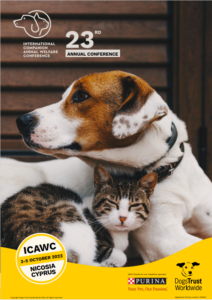 (Dogs Trust Worldwide, 2023)
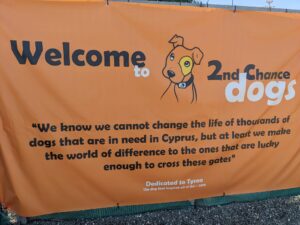
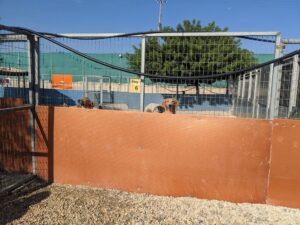
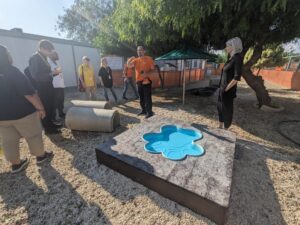
This year’s conference was held in Nicosia, Cyprus and kicked off with a really inspiring tour of the 2nd Chance Dogs shelter. The shelter has been running from its current site in Nicosia since 2015. It can house 60 dogs at a time and has 30 spacious runs which have individually insulated kennels, along with ten large play areas and a separate puppy block. This all sounds impressive, and it is – the shelter was set up by Doris and Marios and has been funded, managed and run by them alongside doing their day jobs running a property business! With limited resources, the charity has to think creatively to ensure they can provide for the dogs in their care. The kennels are converted shipping containers and without access to an onsite supply of water, the water is delivered in large containers weekly and piped around the kennels.
After the tour, I attended the meeting of the EU Dog and Cat Alliance, which has members from 27 EU member states who are united in the ambition to build a better Europe for dogs and cats. In the meeting, members shared experiences and challenges from their own countries, and it was interesting how many of the common issues were shared between members, including overpopulation, dangerous dog concerns and the management of diseases. Just like what we often hear in the UK, many members mentioned that even where good legislation was in place, enforcement of this was often lacking.
In the afternoon we attended a session delivered by Matthew Payne, Human Behaviour Change Manager for Dogs Trust called Designing Better Solutions. A familiar topic for the Woodgreen, but it’s always great to hear other perspectives and to reinforce much of the learning we have done over recent years. As part of the session, we explored the systems thinking approach to change management and worked on a short exercise to try to identify some of the key issues that may lead to a person not taking their pet to a vet for treatment. It was a really interesting session that highlighted the variation in how issues currently affecting pet welfare are being interpreted and approached.
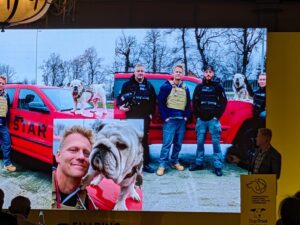
Over the course of Wednesday and Thursday we attended 22 talks on a huge variety of topics – from cat population management to disaster management, and rabies to volunteer engagement – some from familiar speakers from International Cat Care and Dogs Trust and others from new friends and colleagues from Soi Dog, Dogs Star foundation, Dogtown, Mission Rabies and Four Paws.
Here are some snippets from the talks:
Dog and Cat Populations:
- There are 139 dogs per 1,000 people in the UK (compared to 239 dogs per 1,000 in the USA and 72 dogs per 1,000 in Sweden) – dog populations are growing, but there is a suggestion that the rate of dog keeping per person is stable.
- Countries with lower dog populations include Turkey 15 dogs per 1,000 people, Malaysia 11 dogs per 1,000 people and Bangladesh 10 dogs per 1,000 people
- Controlling dog populations is a function of understanding the behaviour of humans (particularly ‘feeders’) and their interactions with dogs.
- The number of cats everywhere exceeds the carrying capacity of their environment, leading to disease, suffering and poor welfare.
What the public think about pets:
- 69% of Brits say they are animal lovers, 9/10 say animal welfare is an important issue to address BUT there has been a 72% increase in clicks on the RSPCA giving up a pet page and an 11% increase in abandonments.
- 59% of people deemed it unacceptable to dress animals in clothes for fashion or fun…. and yet there are 27,000 monthly searches on Google for dog costumes.
- 84% consider it unacceptable to breed animals with genetic health problems…. but there are 22,000 Google searches a month for French bulldogs.
Want to know more about this? Check out the RSPCA Kindness Index here Pet owners | rspca.org.uk
Catch-Neuter-Vaccinate-Return (CNVR) program in Bangkok:
- Over 500,000 stray dogs have been sterilised and vaccinated in Bangkok since 2016.
- This has reduced roaming dog density – from 2.69 dogs per km in 2016 to 1.39 in 2022.
- There has also been a reduction in rabies cases, from 252 cases in 2016 to 17 cases in 2022.
- There are signs of improved dog welfare, including a significant decline in the percentage of dogs with a poor body condition score and/or skin conditions.
- Improved human-dog relationships have been reported.
The talks were all delivered by such inspirational and engaging speakers, each one bringing a new perspective, different experiences and fresh ideas, so many of which could be taken and translated to support our work at Woodgreen.
If you are interested in hearing more, please do reach out to me or Helen (or the lovely Louise Allum who was there in her role as Dogs Trust Trustee).
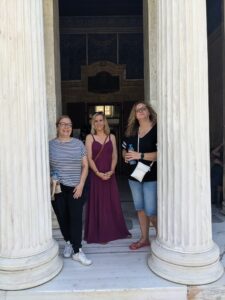
I feel so lucky to have had the opportunity to attend the ICAWC conference. If there is a conference you’ve always wanted to go to please do consider speaking to your manager and why not think about applying for the Rachel Radwell Bursary? It could be an amazing opportunity to learn, build networks and contribute to making the world a better place for pets.
Next month, we’ll be introducing our new Head of Specialist Services, Dr Fiona Cooke and talking all things research, including our upcoming plans for research at Woodgreen!