
May 2024
Thought leadership at Woodgreen – Sharing new initiatives and highlighting challenges
May has been a busy month for sharing our thoughts, ideas and projects with others in the animal welfare sector and beyond. Whilst our days are usually spent working on projects to help more pets and their people, it’s important that we don’t just sit on our learnings from these – we need to take time to talk about them and how they can create change and impact; further cementing our position as a thought leader in the sector.
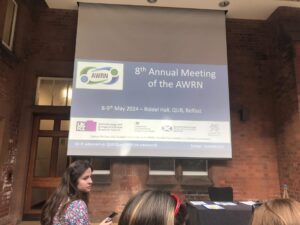
As you’ll have seen in my previous blog, 2023 was an important year for developing a new approach in the community space. Woodgreen has been recognised for our outreach work for some time and we wanted to share the new approach we’ve been testing with other organisations, presenting the opportunity to consider how aspects may be beneficial to their own community programmes. Back in February, I spoke about this project at an All-party Parliamentary Dog Advisory Welfare Group meeting in Westminster and it was really well received. This month I was fortunate to be able to discuss the project again at the Animal Welfare Research Network (AWRN) Annual Meeting in Belfast, and Chris Bennett was also able to talk about the project alongside Vicky Drummond at the Association of Dogs and Cats Homes (ADCH) conference. What was great about presenting at these two events was that they were completely difference audiences. Opportunities to interact with a range of different people mean we get to learn more about the experiences of others and benefit from their insights in different contexts which could be applicable to our own work. We also reach a broader audience with our own messaging.
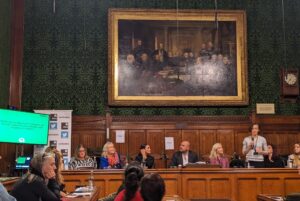
The AWRN meeting attendees consisted of mainly academics and graduate students with some representation from commercial industries too. The meeting was about sharing research projects relating to animals in a range of different contexts; really pleasingly a key theme that arose was the importance of involving humans to help their animals. Essentially asking how do we get the humans to do better for the animals in their care. Events like this are key to building relationships which may help us to further our research contributions and collaboration opportunities more broadly. Government departments such as DEFRA are frequently represented at meetings such as this, so this offers a fantastic opportunity to get Woodgreen’s work on the radar whilst also highlighting the challenges we face.
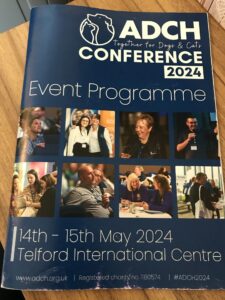
The ADCH conference is a two-day event bringing together rescues and animal welfare organisations from across the UK to share ideas and good practice. This year Woodgreen was an event sponsor. We had a stand, and we were involved in presenting three sessions during the conference. Chris and Vicky spoke about the value of co-creation in service design, sharing our approach to developing both digital and community-based services alongside the service users. Chris also joined representatives from other charities to talk about the Pet Education Partnership: a collaboration between eight animal welfare charities focused on improving animal welfare education for primary school children. Both sessions were well attended, with lots of follow-up questions and enthusiasm in discussions afterwards.
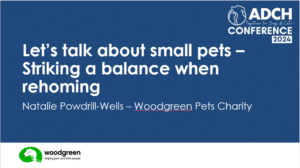
Despite the conference being focused on cats and dogs, for the second year in a row we were offered a lunchtime session to focus on our smaller pets like rabbits and hamsters. I couldn’t believe it when I asked one of the organisers how many people had booked on only to be told that it was sold out! They genuinely had to put someone on the door to tick off attendees as they arrived and turn away those without a booking. It was an amazing way to demonstrate the demand for more opportunities to concentrate on small pets. The session focused on discussing the challenges that rescue organisations face when rehoming smaller pets, particularly the need to ensure that appropriate accommodation is provided in the new home, whilst still appealing to the general public for rehoming. The session discussions were thought provoking, and you could tell how difficult it was for attendees to decide on their own position on the subject. Whilst the majority had an initial gut response that we should never compromise on the accommodation standards we request; it was interesting to see the conflict develop for people when they then thought about the bigger picture and how this might impact so many animals on waiting lists. Look out for the opportunity to join this discussion at Woodgreen, as we will be repeating this session internally for staff and volunteers in the coming months. Sessions like this always work best when a range of different people attend, bringing with them different perspectives, so whatever your role at Woodgreen you’re very welcome to join us in what is sure to be a thought-provoking session.
Of course, whilst speaking at events like these represent opportunities to promote Woodgreen, share good practice and innovative ideas with others in the sector, it’s important that our efforts go beyond this. These events can provide a launchpad for new collaborations like the Pet Education Partnership, and the contacts we make can get Woodgreen a seat at the table for important discussions and working groups. Whilst we take some time to reflect on the discussions we’ve been a part of over the last month, we hope to use the momentum from these highly successful sessions to continue to push for improvements in pet welfare.