July 2024
Find out about the PDSA PAW report 2024!
This month I’m going to discuss some of the key findings from this year’s PAW Report. The PAW report is produced by the PDSA on an annual basis and involves an in-depth survey of dog, cat and rabbit owners in the UK. It’s a really useful resource for those of us working in the field of companion animal welfare and can help us to track important pet ownership trends and patterns across the years.
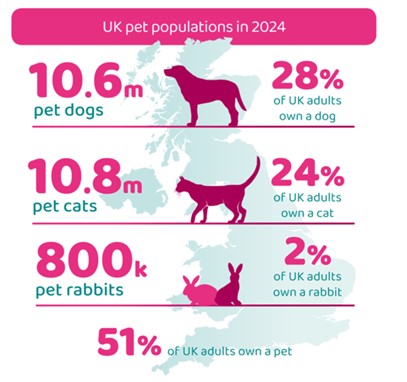
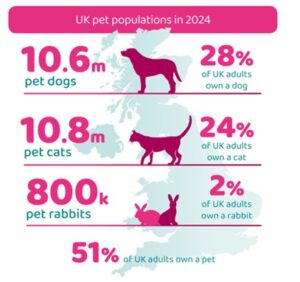
The 2024 report revealed that 51% of the UK population own a pet: 28% own a dog, 24% own a cat and 2% own a rabbit. The report also gives population estimates for each of the species. Interestingly, there’s been a decrease in the proportion of owners having more than one dog, but this hasn’t really changed for cats or rabbits.
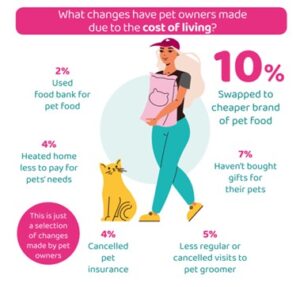
The report found that 78% of respondents agree that the cost of living will have a negative effect on the welfare of pets in the UK, so perhaps financial factors are influencing the number of pets people can afford to care for. 24% of pet owners (5.4 million pets) confirmed that the cost-of-living crisis was having an impact on how they cared for their pet. 2% of owners have had to seek pet food from a foodbank, which is double the percentage from 2023 (1%).
This year, 38% of all pet owners responded that this was their first experience of owning this species of pet as an adult. The most common places that owners have acquired their pets from remained similar to previous years. Whilst dogs are most likely to be acquired from a breeder (33%), cats were most likely to be acquired from a rescue centre (29%) and rabbit owners were most likely to get their rabbit from a pet shop or garden centre (26%). For dogs and rabbits, those acquired from rescue centres made up 17% and 20% respectively. The data in this year’s report represents a continued decrease in the proportion of both dog and cat owners acquiring their pet from rescue centres. Interestingly, the proportion of dog owners who got their dog from family, friends or neighbours is higher this year (16%) than in previous years (2019 = 11%, 2022 = 13%, 2023 = 13%). Given the increasing number of relinquishment requests for dogs seen by rescue organisations, it is potentially worrying that this represents an even larger number of dog owners needing to give up their dogs. Alternatively, they may be turning to other rehoming options if rescue centres can’t help.
Before choosing their pet, owners undertook a variety of different actions, including looking on the internet (33%), taking advice from friends or family (24%) or getting advice from a rescue (17%). Perhaps concerningly, 36% of respondents answered that they were using previous experience to choose their pet. Whilst this isn’t inherently problematic, it raises concerns that pet owners may not be keeping up with the latest information on pet care and behaviour, which can change considerably during the life span of a pet. Given the ongoing cost-of-living crisis, it is also concerning that only 24% of owners reported looking into the cost of owning a pet before choosing them. Costs tend to be considered more often in the case of dogs (29%) and rabbits (26%) than for cats (17%). Positively, the number of owners who reported that they didn’t do anything before choosing their pet (13%) has continued to decrease since 2020. This statistic differed with different sources of pets. Those who acquired their pet from a breeder or rescue centre were more likely to have done research compared to those getting their pet from a family member, friend or neighbour, or where the pet was found as a stray. 36% of rabbit owners who hadn’t done any research got their pet from a pet shop or garden centre compared to 4% who acquired from a breeder and 14% who acquired from a rescue.
This year 19% of dogs were reported to be left home alone for 5 or more hours on a typical day. Overall, the findings suggest that the amount of time dogs are being left alone is returning to pre-covid levels. Concerns surrounding the behaviour of dogs were highlighted in this year’s data, including a significant increase in the proportion of dogs who have bitten a stranger in the home where professional medical care was required. The percentage of dogs showing unwanted behaviour around livestock has also increased from 4% in 2023 to 6% in 2024. Significantly more owners who have used aversive training aids have dogs who show unwanted behaviour compared to those who use rewards (treats/food). It’s important to note that this is an association and does not represent a causal effect, but it’s still interesting to consider as it may be that owners are feeling they have no other option left to try to deal with certain behaviours. There is also a shift in neutering behaviour, with fewer owners neutering their dogs compared to 2019. This might be due to the changing narrative and scientific literature around the benefits of keeping some dogs, particularly males, entire.
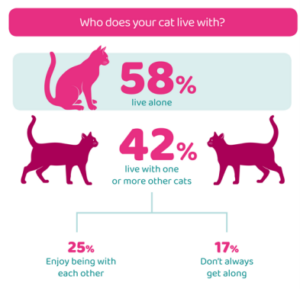
Only 15% of cat owners have heard of the five welfare needs, fewer than for both dog (18%) and rabbit owners (35%). 58% of cats live alone and the other 42% live with one or more other cats. 17% of pet cats don’t always have a positive relationship with their housemates. This 17% represents 1.8 million cats who may be living in a social set up which results in stress. Cats in multi-cat households are more likely (55%) to show one or more behaviours that could be indicative of stress than those living alone (48%). This percentage is higher (67%) for the cats who are reported to not get along with the cats they live with. In terms of environment, there has been an increase in the proportion of cats being kept solely indoors (31%), compared to 2022 (28%). Since the PAW report started in 2011, the proportion of indoor cats has been steadily increasing from 15%. Resource (litter trays, food bowls, scratching posts etc.) provision continues to be inadequate, particularly in multi-cat households.
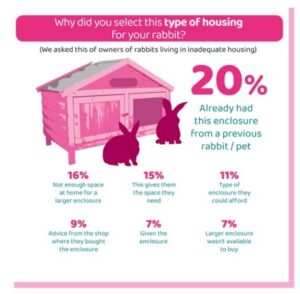
Sadly the 14 years of the PAW report have consistently highlighted that rabbits are routinely not having their needs met. Interestingly, however, rabbit owners appear to have a higher level of awareness of the five welfare needs than those of dogs and cats. Whether this translates into positive care practice is debatable. Whilst 94% of rabbit owners reported they felt informed of their pet’s need for companionship, 50% of rabbits (400,000) are not having their companionship needs met appropriately. In the years from 2011 to 2019 we were seeing a steady improvement in the proportion of rabbits with inappropriate companionship. Unfortunately, there hasn’t been any further improvement since 2020. In 2024, 22% of rabbits live in accommodation which fails to meet their needs. Owners with inadequate accommodation for their rabbits tended to either already have the accommodation from a previous pet (20%) or to not have enough space at home for a larger enclosure (16%). Where rabbits were provided with a run, two thirds were able to freely move between their hutch and run as they choose. Positively, more rabbits are being fed the correct amount of hay or grass.
Hopefully you’ve found this short summary of some of the wealth of information in the PAW report insightful and may be able to see ways it could help you in your work. For Woodgreen, the report provides a tracker for important welfare issues and an insight into the behaviour of owners of some of the species we care for. If you’d like to know more, here is the link to access the full report: The PAW Report 2024 – PDSA.
All images credited to PDSA (2024)