August 2023
Welcome to August's Research and Insights Blog
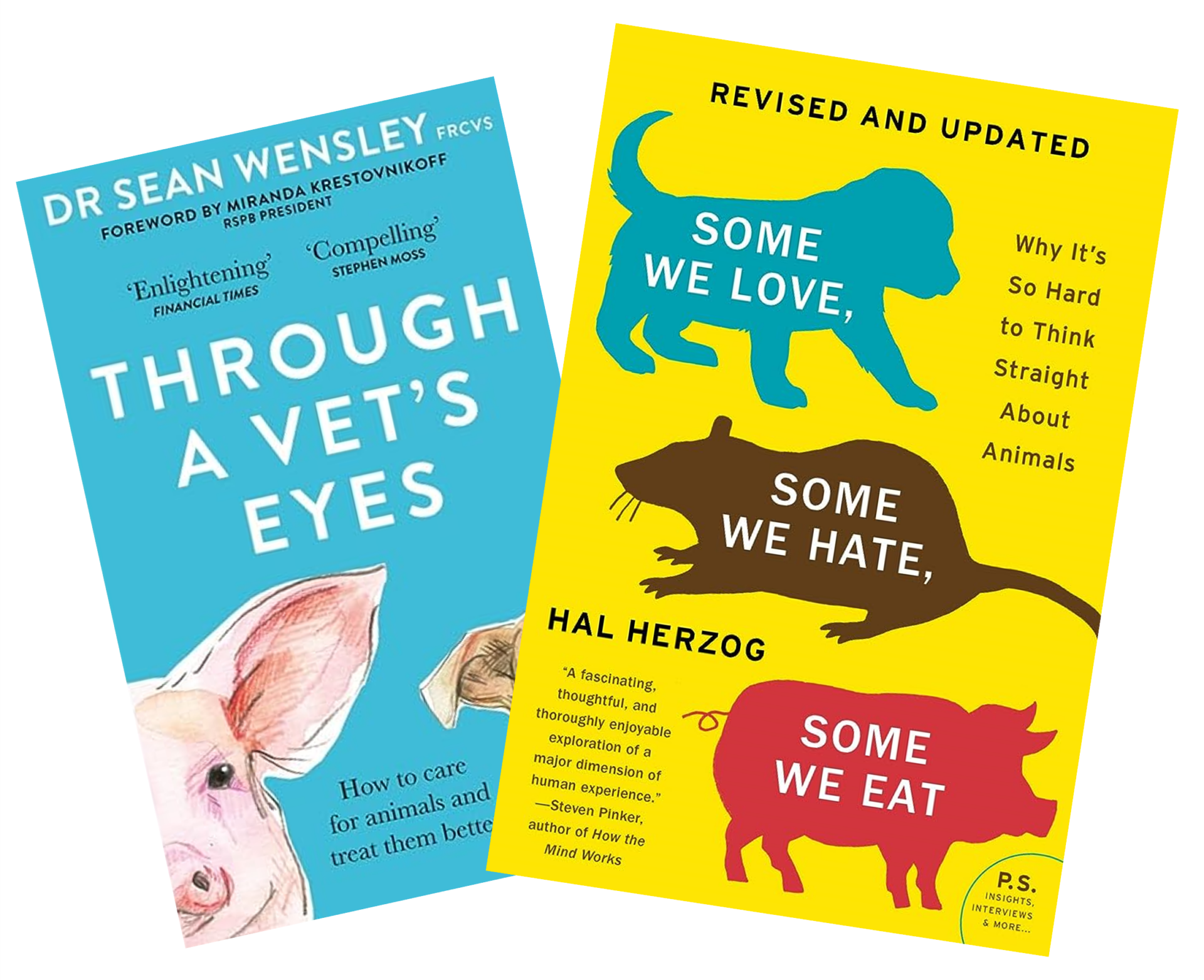
As promised this month I’m going to be talking about a couple of books I’ve read recently which have really got me thinking about our relationships with animals.
Dr Sean Wensley’s ‘Through a Vets Eyes’ is an interesting read that delves into the injustices which animals experience every day. The book encourages readers to see things from the animal’s perspective and to really consider how the animals in our care could have a better life. Throughout his time as a vet in general practice, Sean frequently saw not only how much companion animals mean to people but also the impact of these close relationships on pets. He argues, and I agree that whilst we get so much from our companion animals, it’s important that we uphold our end of the bargain to ensure they are provided with a good life.
The book journeys through different scenarios in which animals are cared for by humans and takes an animal welfare-based view, evaluating the five welfare needs of animals in different contexts. As many of us will already be aware, whilst animal welfare standards in the UK are amongst the highest in the world, there are still many cases where animals are not having their five welfare needs met. Comparisons of wild animals and those kept domestically or commercially allow for discussion as to how the needs of the animal are or are not provided for and enable in-depth consideration of what natural might look like for the particular species. Many of the chapters focus on animals which are farmed for food, in part because it’s simply impossible to ignore them with the sheer numbers involved, but there is also a chapter which focuses on companion animals and explores many of the issues we regularly see as a charity.
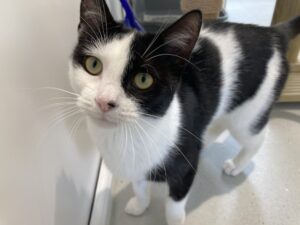
The companion animals chapter paints a pretty dim picture of the life of pets, highlighting problems for their welfare from the very beginning. One of the topics discussed is puppy farming and the ongoing impacts on the health and behaviour of dogs due to the spike in demand through Covid-19. Another highly topical area of discussion included is the problems resulting from selectively breeding for particular traits, which can have both intentional and unintentional impacts on animals. In some cases, such as French Bulldogs, traits which can negatively impact health are intentionally selected because they look a particular way, but in other cases breeding for a specific trait can accidentally select for the genes for an inherited disease. There are also plenty of challenges for our companion animals in the way that they are kept and cared for, for example, a common problem for cats is chronic stress, often because of an environmental stressor or an agonistic relationship with another cat in the home. Rabbits face challenges across the spectrum of welfare needs, from unsuitable diets to severe dental issues and lonely solitary lives.
Whilst the book might sound all doom and gloom, it is written in a way which should hopefully appeal to a wide audience, will advocate for animals, and challenge the status quo, something Sean believes is his professional duty as a vet. The final chapter highlights what we can all do to make improvements for the animals who are part of our lives in some way or another. The inclusion of specific actions that can be taken on a personal level and ways to influence businesses and even governments, present impactful ways to take steps towards better ways to care for animals.
Another book which I highly recommend is ‘Some we love, Some we hate, Some we eat – Why it’s so hard to think straight about animals’ by Hal Herzog. It’s a great read, really engaging and will 100% get your brain churning as it takes a journey through our extremely complex relationships with animals. The scope of the book is massive, so to do it justice in just a few paragraphs is difficult but hopefully, I can tell you just enough to encourage you to give the book a read yourself. If you read it, be prepared to find yourself questioning some of your own beliefs.
Our relationships with animals are not just complex, they are often contradictory. Take an animal’s place in society for example. Many of the companion animals we are familiar with in the UK hold multiple positions in our society, and this position can influence how they are valued and treated, even when they are exactly the same species. Typical examples of this are mice, rats and rabbits, all companion animals found in hundreds of thousands of homes across the UK, but also in huge numbers in research laboratories.

Cultural differences might also influence the way a particular species is viewed. This time consider dogs as an example. Think about a grid with quadrants which has emotional feeling e.g. loved to loathed on one axis, and usefulness e.g. useful to detrimental on the other. Guide dogs would sit in the loved and useful box; in the UK pet dogs would be considered loved but not so useful; whereas in Saudi Arabia dogs are generally strongly disliked so would be considered loathed and detrimental. Dogs living with the Bambuti people hold the unusual position of disliked but useful and are treated poorly but considered helpful for hunting. It’s a perspective that offers an interesting insight into how a particular species can have such a variety of different relationships with humans across the world.
Another element which can play an important role in our relationships with animals is language and this is an area where we can probably all give some thought to the impact of the words we use. The names we give to animals and the words we use to describe them can influence the way we think about them, both on an individual and societal level. In this case, consider animals regularly farmed for food. For sheep, pigs and cows, we use the words lamb, pork and beef respectively, but for chickens and fish, we retain the same word. Essentially the words used for meat appear to change as we travel further along the phylogenetic tree to reach species who are less like us in physical or genetic characteristics. It’s always interesting to consider our own use of words and I would challenge you all to think about the language you regularly use when talking about the animals in your roles at Woodgreen. For me personally, I’ve recently reflected a lot on the order in which I communicate to someone about the range of pets we care for, historically it’s always been dogs, cats and then small pets when I list them off, but what does that consistent ordering subconsciously communicate about the importance or value given to these species? Perhaps nothing, but I’m making a real concerted effort to mix up the order from now on and maybe if we all do, we can take small steps on the journey to increase the societal value given to our smaller companions.
Of all the chapters of the book, the one that had me thinking most deeply about my own beliefs related to cock fighting and broiler hens. Hal Herzog presents the lives and deaths of birds in both situations and describes his own personal experiences with individuals participating in cock fighting earlier in his academic career. He was completely baffled at how much someone who participated in a blood sport could love their animal and how often those participating in the cock fighting were completely normal people, with normal jobs including mayors, truck drivers and even detectives. The challenging question posed within this chapter is “What would you rather be a Gamecock or a Broiler chicken?”. Whilst your instant answer is probably neither, one of these practices is legal and the other not, equally one is supported by millions of people and the other is despised by the same individuals. If you strip it back to the details surrounding the care given to each and the welfare that they can be considered to experience as a result of those care practices, thinking straight becomes a bit more challenging. Fighting roosters have a pretty good life, they are given high standards of care and usually not fought until at least 2 years old, but they are then put into a sport with a high chance of death and serious injury. Broiler chickens on the other hand live their entire lives housed in high-density accommodation, probably never going outside, frequently have negative interactions with other hens which can result in injury, and have a ridiculous growth rate linked to severe health concerns. They’ll also be slaughtered at just over a month of age but under controlled conditions designed to minimise suffering. So, if you had to pick one which would it be? I’m not sure that based on the care practices, it’s easy to say you’d choose the life of a broiler chicken over the life of a gamecock, but millions of broiler chickens are raised for meat every year and it’s generally accepted within society. When it comes to animals, very little of what we do and believe seems to make sense when you take the time to examine the detail.
I hope you’ve enjoyed finding out more about both of these fantastic books. I thoroughly recommend giving them a read. On a personal level, both have encouraged me to give more consideration to my actions when it comes to animals. I do eat meat, seeking out high welfare options wherever possible, but reading both books has really got me thinking about whether and how this is something I will continue to do moving forwards. We all have our own personal ethics and morals, they’re what make us individuals, but I think it’s important to stay in touch with them and just check in with ourselves from time to time, particularly as we learn and grow.
Look out for next month’s blog, which will explore some of the recent research released relating to the species of pet which we care for at Woodgreen.