April 2024
Co-creation in the community – Supporting vulnerable pets and their people
This month I want to tell you more about an exciting project which began last year to create a framework upon which to develop future community projects to support more pets and their people. Whilst as an organisation we’ve been carrying out community outreach work for many years, we’ve realised that just like our brand, our work in our communities needs more involvement from the people we hope to help. So that’s one of the key differences to prior projects, we’ve recognised just how important it is to listen and take time to understand the community. Despite being relatively close geographically, what works for one community in terms of providing effective support, may not work for all. Throughout 2023 we’ve been engaging with a pilot community and utilising the key findings to develop a framework and toolkit for future projects. The development of both the framework and toolkit have been guided by science to influence human behaviour to positively impact pet welfare.
One of our first steps was to recognise that in order to change our approach externally it was important to reflect on anything which needed to change internally first. To ensure we could continue to offer excellence in our services, it was important for our internal teams to develop new skills and knowledge, and to gain appropriate experience of our new ways of working. Fortunately, there are experts in the field of human behaviour change who we could learn from. Human Behaviour Change for Life (HBCL) are a company who as their name suggests focus on changing human behaviour. HBCL have expanded their focus recently but were originally called Human Behaviour Change for Animals and with experience of leading and supporting projects worldwide focused on improving animal welfare through the humans caring for them, they were the perfect partners to support this project. In true human behaviour change fashion, rather than leading the project and completing it for us, a mentoring and coaching approach was taken to provide the Woodgreen team with opportunities to practice on a pilot project and develop the necessary skills for the future.
Our pilot community was Littleport, a small market town in East Cambridgeshire. The project involved several stages of research, each building upon the one before. Throughout the year we undertook a number of workshops, surveys, interviews, co-creation sessions and intervention trials. Each piece of research contributed in its own unique way to the development of the final intervention to pilot in the community. Through this engagement we identified three key themes which had the potential to compromise the welfare of pets in the area. Firstly, there was a lack of awareness that Woodgreen were able to provide pet-related support services. Secondly, pet owners and pet professionals highlighted that pets were not receiving timely veterinary treatment. Finally, it became apparent that there was a lack of pre-planning for accessing veterinary care amongst pet owners in the community. There appeared to be a general feeling of struggling with veterinary costs but believing that treatment for a pet could be accessed in an emergency. What was concerning was the lack of a plan for how this might actually happen, especially in a situation which could be time critical.
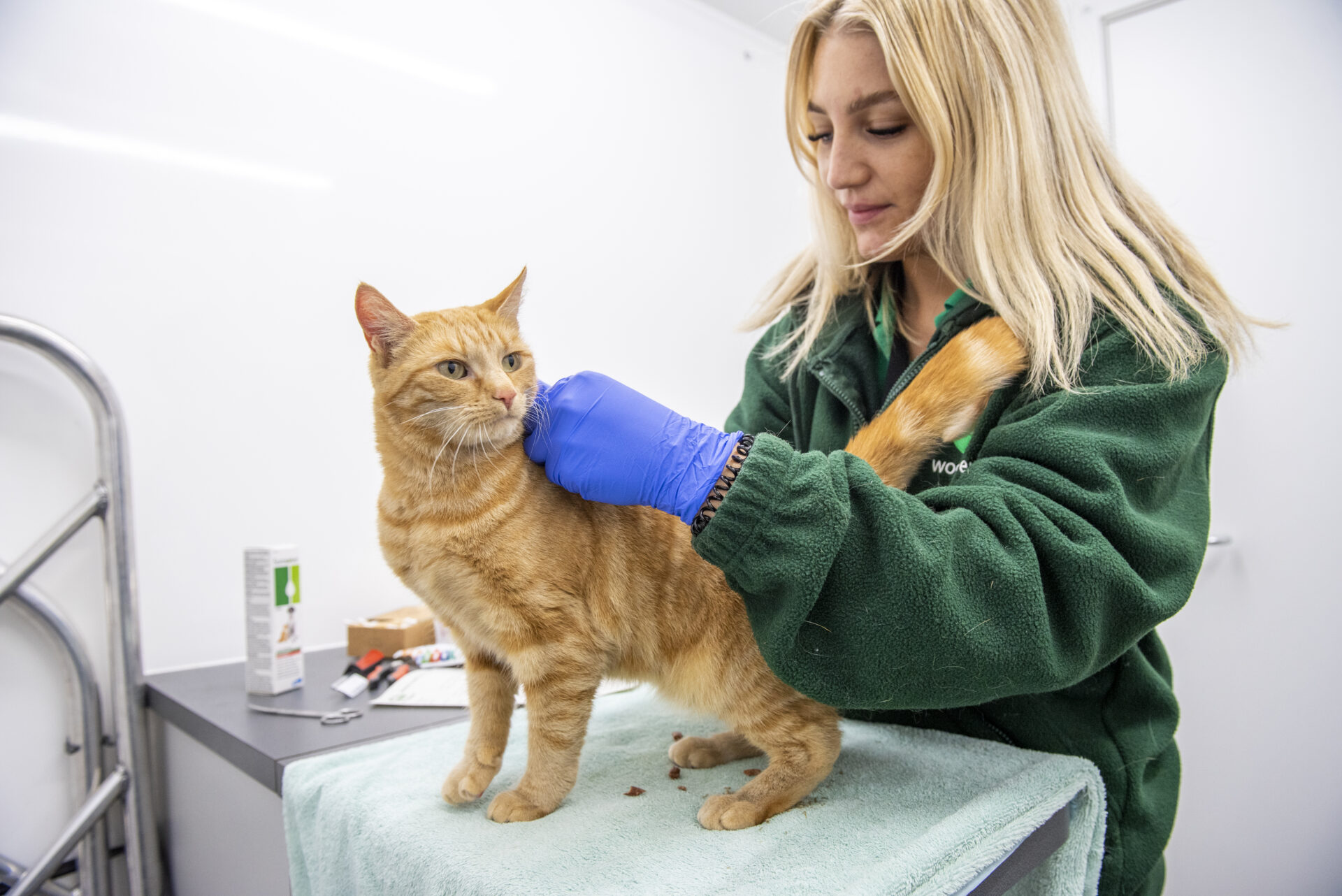
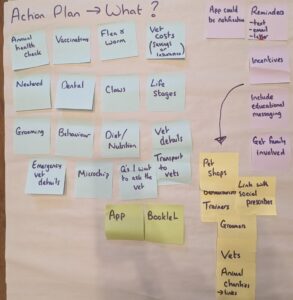
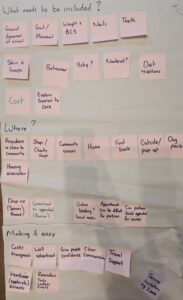
From these concerns, we applied human behaviour change models, such as the Behaviour Change Wheel (Michie, van Stralen and West, 2011) and The Stages of Change Model (Prochaska and DiClemente, 1983) to begin to think about potential intervention options. Our journey through these models considered the behaviours we would want pet owners to demonstrate, along with aspects such as when, how, and where they would display them. This reflection resulted in the idea of providing pet health and wellbeing checks within the community, with an integrated action planning aspect, to enable pet owners to work through their pet-related concerns with a member of the Community Team. We took these ideas into co-creation workshops with local pet owners and pet professionals. The positivity and engagement from all attendees was fantastic to see and meant that the benefits of the workshops went far beyond the development of the services. Workshop attendees expressed their willingness and desire to help Woodgreen by being an ambassador in the community and provided helpful suggestions for potential partnerships.
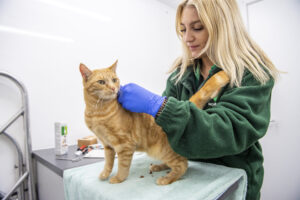
Our next stage was to test the intervention itself and to get out into the community with our offer of Health and Wellbeing checks. Through our community engagement we had identified partners who were happy to provide venues to host the sessions and some of the key communication channels for the local area. Feedback was collected from both pet owners and the community team during the nine intervention trial sessions, along with observations of the research team. On the whole, feedback was quite positive, but we also received some helpful constructive pointers on aspects which could be improved for the future, such as the name of intervention or the accessibility of booking.
It’s important to note that this project was never about the number of pets we could support in this community over the year. It was all about involving the community in the development of our support services and learning from the experience to be able to help more pets in our future. The pilot project is now almost complete, with the write up stage currently being finalised, but this is just the beginning for our new approach. We will be sharing our experiences with the wider animal welfare sector through attending various conferences and meetings over the summer to promote what sector colleagues outside of Woodgreen have pleasingly referred to as the “Woodgreen model”. We also plan on publishing our approach to this project in a scientific journal, in the hope that it will inspire others to look at community work through a human behaviour lens to continue to improve the welfare of more pets through their people.
So, what does the future look like? A huge part of this work has been to build a toolkit which we can apply to other communities and throughout the next 12 months this will be further tested in an additional eight communities. This period of development and testing is essential for ensuring our offerings are effective for the pets and their people we want to help via preventative and early-intervention care. By 2028 we aim to be supporting 20 communities across the East of England by following the evidence-led, behavioural-science based framework developed through this project and refined by the opportunities which 2024 presents.
If you’d like to know more about this project and the plans for 2024 and beyond, please feel free to reach out to Chris Bennett or myself. We’d be more than happy to chat about our experiences so far.
Michie, S., van Stralen, M.M. & West, R. (2011) The behaviour change wheel: A new method for characterising and designing behaviour change interventions. Implementation Sci 6, 42. https://doi.org/10.1186/1748-5908-6-42
Prochaska, J. O., & DiClemente, C. C. (1983). Stages and processes of self-change of smoking: Toward an integrative model of change. Journal of Consulting and Clinical Psychology, 51(3), 390–395.